
William Scott - 1st Baron Stowell

Name
William Scott
First name
William
Last name
Scott
Born October 17, 1745
Place of birth
in Heworth near Newcastle upon Tyne

Died January 28, 1836
Place of death
at Erleigh Court
Gender
0
Alias
1st Baron Stowell
Biography

William Scott was an English judge, jurist and Member of Parliament.

William Scott's father (also named William Scott) was a tradesman working for a coal fitter's business. The young Scott was educated at Newcastle Royal Grammar School, before going to Corpus Christi College, Oxford University, where he later (1773-1785) became the   Camden Professor of Ancient History. Around 1780 he graduated as Doctor of Civil Law, and he soon embarked on a distinguished legal career, eventually becoming, in 1798, judge of the High Court of Admiralty. 

He unsuccessfully tried getting elected for parliament for Oxford University in 1780, but had more luck some years later, when in 1784 he was elected M.P. on a so-called double return1 for the constituency of Downton, which was also the reason why Boswell referred to him as "Mr. Scott of University College, Oxford (now Dr. Scott of the Commons) in his Journal of a Tour to the Hebrides, published in 1785. He was, however, unseated that same year on a petition. 

He did not again seek election until 1790 when he was successfully elected Member of Parliament for Downton. He sat for this constituency until 1801, when he was finally elected for Oxford University as "a single instance of a professional man representing the university".2 

Scott was married twice. In 1781 he married Anna Maria (d. 1809), daughter of John Bagnall of Erleigh Court, with whom he had four children, only one of whom, their daughter Marianne, survived her father. In 1813 he married Louisa-Catherine, the widow of John, the late Marquess of Sligo.

William Scott's younger brother, John (1751-1838) also became a politician, who rose to serve as Lord Chancellor of Britain for almost three decades (1801-1806, 1807-1827)

Life with Boswell

Scott accompanied Dr Johnson on the road from Newcastle to Edinburgh during the last stage of the latter's journey from London to Edinburgh, where Johnson was going to meet Boswell to go on their famous tour of Scotland. Boswell, apparently, had not met Scott before, but wrote in his Journal of a Tour to the Hebrides of their first meeting in Edinburgh at Boyd's Inn3 on August 14, 1773, that "Mr. Scott's amiable manners and attachment to our Socrates [Johnson] at once united me to him." 

During their stay in Edinburgh, Johnson stayed in Boswell's house in James's Court, while Boswell noted sincerely regretting that he did not also have a room for Mr Scott. Scott came to breakfast on the next day, August 15, however, and he and Johnson were introduced to Boswell's friend, the banker William Forbes.

When Johnson and Boswell set up from Edinburgh on August 18, Boswell would "gladly have had Mr. Scott to go with us, but he was obliged to return to England."

Portrait media

  • WilliamScott.JPG

James Beattie - Poet and Philosopher

Name
James Beattie
First name
James
Last name
Beatties
Born October 25, 1735
Place of birth
at Laurencekirk in Kincardineshire, Scotland

Died August 18, 1803
Place of death
in Aberdeen
Gender
0
Biography

James Beattie was a Scottish poet and philosopher, best known for his Essay on the Nature and Immutability of Truth (1770) and his poem The Minstrel (1771). Married (1767) to Mary Dunn, with whom he had two sons, James Hay (d. 1790) and Montagu (d. 1796).

Beattie was born in 1735, the son of a shopkeeper and small farmer. He was educated at Marischal College in Aberdeen, where he formed a lifelong friendship with abolitionist James Ramsay. In 1757 he was appointed master at Aberdeen Grammar School, and just a few years later in 1760, at the young age of 24, he became Professor of Moral Philosophy and Logic at his alma mater Marischal College, supposedly due to the influence of his friend Robert Arbuthnot of Haddo.

In 1770 he wrote the Essay on the Nature and Immutability of Truth, as an answer to the theories of David Hume. This gained him instant fame and led to an introduction to King George III, a government pension of £200 and the degree of LL.D. from Oxford. In 1771 and 1774 respectively was published the two volumes of his poem The Minstrel, which even won him the praise of Dr Johnson himself. Beattie had met the poet Thomas Gray some years earlier, during the latter's journey into Scotland, and Johnson wrote in his Lives of the Poets (1779-1781), that "[Gray] naturally contracted a friendship with Dr. Beattie, whom he found a poet, a philosopher, and a good man."

In 1783 Beattie was co-founder of the Royal Society of Edinburgh.

In contrast to his professional career, his personal life was marred with some degree of tragedy. In 1767 he married Mary Dunn, a daughter of the Rector of the Aberdeen Grammar School, and she bore him two sons. Mary, however, suffered from some unidentified mental disease and was eventually committed to Musselburgh Asylum. As if that wasn't bad enough, his two promising sons died in 1790 and 1796 respectively, at the ages of 22 and 18.

Following Beattie's death in 1803, An Account of the Life and Writings of James Beattie, LL.D., including many of his Original Letters was written by his friend, the eminent banker and literary executor of James Boswell, Sir William Forbes. It was published in 1806.
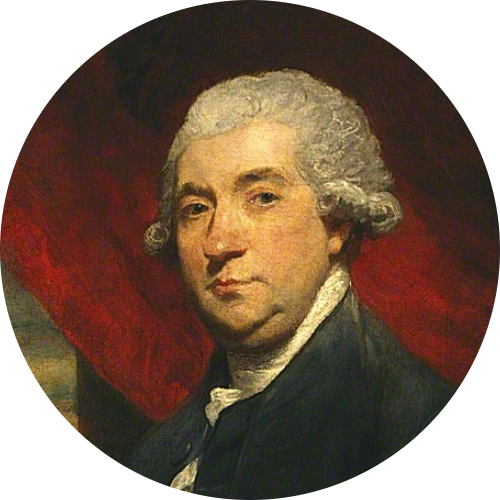
Life with Boswell

In 1773, Beattie was one of those illustrious Scots whom Boswell asked to extend invitations to Dr. Johnson in order to attract him to visit Scotland. Boswell wrote to Beattie from London that

"I now seriously believe Mr. Samuel Johnson will visit Scotland this year, but I wish that power power of attraction may be employed to secure our having so valuable an acquisition; and therefore I hope you will without delay write to me what I know you think, that I may read it to the mighty sage with proper emphasis, before I leave London, which I must do soon."4

As it happened, Beattie was in Edinburgh when he received the letter, and about to leave for London, and he promised in his short reply to Boswell, that "[I] hope to have the honour of paying my respects to Mr. Johnson and you about a week or ten days hence [in London]. I shall then do what I can to enforce the topic you mention [...]".4 

Literature

Beattie's works, including The Judgement of Paris (1765), An Essay on the Nature and Immutability of Truth (1770), The Minstrel; or, The Progress of Genius (1771 and 1774), Dissertations Moral and Critical (1783), and his Elements of Moral Science (1790 and 1793, 2 vols.) are all available via AbeBooks, as is Sir William Forbes' An Account of the Life and Writings of James Beattie, LL.D.

Marlies K. Danziger

Full name
Marlies K. Danziger
First name
Marlies
Last name
Danziger
Born February 16, 1926
Died February 26, 2018
Biography

At the time of her death, Danziger was Emeritus Professor of English at Hunter College and the CUNY Graduate Center. 

Boswellian impact

Danziger was a long time member of the editorial staff of the Boswell Editions at Yale, being co-editor (with Frank Brady) of Boswell: The Great Biographer, the last volume of Boswell's journals to be published in the trade editions in 1989, and main editor of the research edition of the Journal of His German and Swiss Travels in 2008.

Anne Catherine Green - Wife of Thomas David Boswell

Name
Anne Catherine Green
First name
Anne Catherine
Last name
Green
Born 1757
Date of birth (prefix)
ca.

Died 1835
Date of death (prefix)
possibly
Gender
1
Biography

Green was the daughter of a Capt. Green, who was killed at the Battle of Minden in 1759. Her brother was Charles Green (1749-1831), who rose to become a General, a Baronet and Governor of Suriname.

In 1783 she married Thomas David Boswell, with whom she had four children, two of whom, Maria (1788-1811) and Thomas Alexander, survived infancy. She appears to have separated from her husband in 1799 and details of her life after this time are sketchy.5

Subscribe to