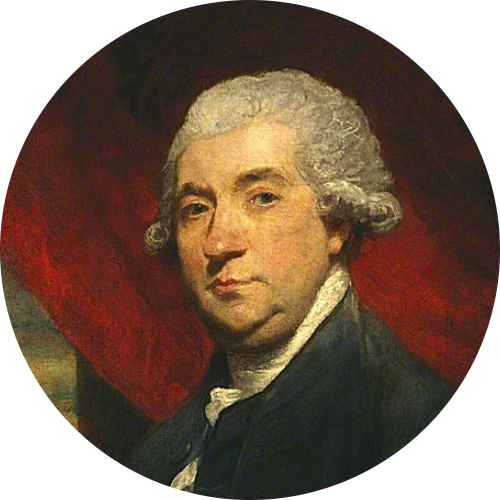
Written by Chauncey Brewster Tinker, Sterling Professor of English Literature at Yale University, Young Boswell: Chapters on James Boswell the Biographer, Based Largely on New Material was the first biographical study of James Boswell grounded in original manuscript correspondence prior to the recovery of the Boswell family archives at Malahide Castle and Fettercairn House.
While preparing his edition of Boswell's correspondence, Tinker examined the original manuscripts of Boswell's letters to his lifelong friend William Johnson Temple at the Pierpont Morgan Library in New York (restoring passages that had been bowdlerized or omitted in the anonymous 1857 Bentley edition), together with unpublished letters and manuscripts in the collection of R. B. Adam of Buffalo and other private and institutional collections. Drawing on this material, Tinker challenged the nineteenth-century view, popularized by Thomas Babington Macaulay, that Boswell was an uncritical compiler who produced a great biography by accident, arguing instead for Boswell's conscious skill and method as a biographer and social observer.
Structured as a sequence of thematic and biographical essays, the volume examines Boswell's early years in Edinburgh and London, his epistolary friendship with Temple, his Dutch sojourn and courtship of Belle de Zuylen (Zelide), his Grand Tour encounters with Jean-Jacques Rousseau and Voltaire, his friendship with the radical politician John Wilkes, his expedition to Corsica and championship of Pasquale di Paoli in An Account of Corsica (1768), his various matrimonial schemes culminating in his marriage to his cousin Margaret Montgomerie in 1769, and his apprenticeship as biographer to Samuel Johnson. Portions of the work first appeared as a three-part series in The Atlantic Monthly ("Young Boswell", "Boswell in Love", and "Magnum Opus") in early 1922.
Written by Chauncey Brewster Tinker, Young Boswell: Chapters on James Boswell the Biographer, Based Largely on New Material (266 pages, with 34 illustrations and manuscript facsimiles) was first published in Boston by The Atlantic Monthly Press in 1922, and in London the same year by G. P. Putnam's Sons.