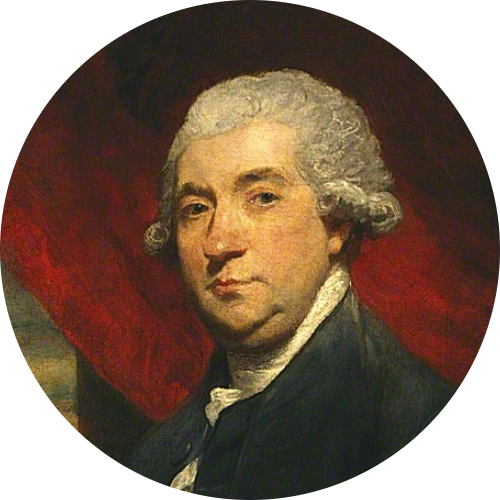
Emerich de Vattel (1714-1767) | ||
|---|---|---|
BiographyEmerich de Vattel. (1714-1767) Born in Neuchatel, Switzerland, the son of David de Vattel, a minister of the Reformed Church, and his wife, Marie de Montmolin. Vattel had his general education at the University of Bâle, before continuing on to the University of Geneva, where he specialized in moral philosophy. In 1742 or 1743 he went to Dresden, where his abilities were at once recognised by the Prime Minister, Count de Brühl. He entered the Saxon diplomatic service and over the next years acted as Embassy adviser and minister-plenipotentiary at Berne before being appointed Privy Councillor in 1758. In 1764 he married Marianne de Chesne, who, on January 31, 1765, bore him a son. In the last 10 years of his life, De Vattel came to be regarded as an influential philosopher and a legal expert, effectively laying the foundations of modern political philosophy and international law with his 1758 book Droit de Gens (EN: The Law of Nations).1 Life with James Boswell:
Boswell waited, with a recommendation from Denis-Daniel de Froment, on Vattel in Dresden, in the evening of October 9, 1764. He was well received and found Vattel Literature:His magnum opus was Droit de Gens - the complete title of which is Droit des gens; ou, Principes de la loi naturelle appliqués à la conduite et aux affaires des nations et des souverains (EN: The Law of Nations or the Principles of Natural Law Applied to the Conduct and to the Affairs of Nations and of Sovereigns) is widely available in old and new editions via Abebooks
Note 1: Main source for this biography is the article Émerich de Vattel by J.E.G. Montgomery in the Journal of the Society of Comparative Legislation, Vol. 10, No. 1 (1909), pp. 17-39
This article was last updated at April 02 2008 11:47:59 CET Other links of possible interest
|
Other biographies that refer to Emerich de Vattel: de Chesne, Marianne
|
|
© 2004-2008 Thomas Frandzen. Read About this site for further info and disclaimer. |
||